

Quick answer
11R22.5 and 295/75R22.5 fit the same 22.5-inch rim but are not interchangeable. 11R22.5 is the imperial size (about 11 inches of section width, no stated aspect ratio); 295/75R22.5 is the metric low-profile size (295 mm wide, sidewall 75% of that), so it stands lower than an 11R22.5 on the same wheel. Never mix the two on one axle or across duals — the different diameters scrub both tires. Buy whatever size is moulded on the sidewall of the tire you are replacing.
Both mount on a 22.5-inch rim. They are not the same tire, and putting one on an axle running the other is how fleets quietly destroy a set of drives.
11R22.5 vs 295/75R22.5 at a glance
They share the 22.5-inch rim and nothing else that matters: 295/75R22.5 is the low-profile size and stands lower, 11R22.5 is the taller conventional size. Do not mix them on one axle; match the size moulded into the sidewall of the tire you are replacing.
| 11R22.5 | 295/75R22.5 | |
|---|---|---|
| Section width | 11 in | 295 mm (11.6 in) |
| Sidewall height | Not stated in the size (conventional profile) | 75% of width: about 221 mm (8.7 in) |
| Overall diameter | Taller — see the maker's data sheet | About 39.9 in (22.5 + 2 x 8.7) |
| Rim diameter | 22.5 in | 22.5 in |
| Profile | Conventional | Low profile |
| Mix on the same axle? | No | No |
The two numbers describe the tire two different ways
11R22.5 is the older, imperial way of writing it: 11 inches of section width, R for radial, on a 22.5-inch rim. 295/75R22.5 is the metric form — 295 millimetres of section width, a sidewall 75% of that width tall, radial, same 22.5-inch rim. The rim is the only part the two sizes genuinely share.
Because the metric size spells out an aspect ratio and the imperial one does not, 295/75R22.5 is the size people call low profile: the sidewall is proportionally shorter, so the finished tire stands lower than an 11R22.5 on the same wheel. That is the whole difference, and it is the reason they are not swaps for each other.
Why mixing them costs you a set of tires
Two tires of different overall diameter on one drive axle roll a different distance per revolution. They cannot both be right, so the differential splits the difference and both tires scrub. The taller tire carries more of the load and wears its shoulders; the shorter one spins slightly and wears its face. You pay for this twice — once in rubber and once in driveline heat.
The same applies across duals on a trailer. A matched pair at each axle end is not a preference, it is what keeps the load shared. If you are replacing one tire, match what is beside it; if you cannot, replace the pair.
So which one do you buy?
Whichever is on the truck now. Read the sidewall of the tire you are taking off — the size is moulded into it, in exactly the form written above. Do not order from the invoice of the last set unless you know nobody changed sizes since.
If you are choosing for a fresh spec rather than replacing, 295/75R22.5 is the more common size on current North American tractors and has by far the wider choice of tread and brand. That is reflected in what we carry: thirteen tires in 295/75R22.5 against five in 11R22.5.
Both sizes, side by side, in stock
One thing the table does not show: there is no steer tire in our 11R22.5 range today. Two of the five are all-position, which may run on a steer axle, but if you specifically want a steer-only rib pattern in 11R22.5, ask us rather than assuming it is on the shelf.
| Size | In stock | Positions carried | Price range | Load ranges |
|---|---|---|---|---|
| 295/75R22.5 | 13 tires | Steer, drive, trailer, all-position | $640.99 – $1,048.99 | 14PR G and 16PR H |
| 11R22.5 | 5 tires | Drive, trailer, all-position | $628.99 – $698.99 | 14PR G and 16PR H |
Two things to check before you order either one
- Load range — 16PR is Load Range H, 14PR is Load Range G. H takes more pressure and carries more weight per tire. Do not step down without checking the tire-and-loading plate.
- Tread depth — the mileage you are buying. Our range runs 18/32 on a shallow trailer rib to 30/32 on a deep-lug drive.
- Federal minimum tread is 4/32 in on a steer axle and 2/32 in everywhere else (49 CFR 393.75) — that is the out-of-service line, not a replacement target.
- These ship freight, not parcel. Send the delivery ZIP and quantity and we will quote the landed cost before you commit.
Frequently asked questions
Can I put a 295/75R22.5 on an axle with 11R22.5 tires?
No. The two sizes have different overall diameters, so they roll a different distance per revolution. On a drive axle the differential splits the difference and both tires scrub; across duals the taller tire carries more of the load. Match the tire beside it, or replace the pair.
Which is more common, 11R22.5 or 295/75R22.5?
295/75R22.5 is the more common size on current North American tractors and has the wider choice of tread and brand. If you are replacing, buy what is already on the truck — read the size off the sidewall, not off an old invoice.
What is the minimum legal tread depth on a semi truck tire?
Under 49 CFR 393.75 the federal minimum is 4/32 inch on a steer axle and 2/32 inch on every other position. That is the out-of-service line, not a replacement target.
In stock at PartStop
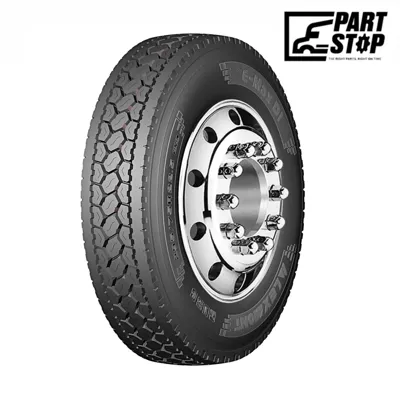
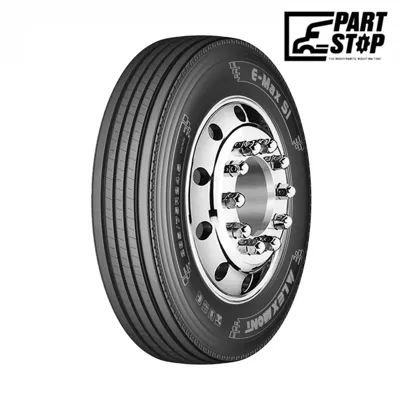
Shop these tires
Premium-quality aftermarket direct replacements, in stock and shipped same day from Tacoma with a 6+ month warranty.
Shop related parts
Premium-quality aftermarket direct replacements — nationwide same-day shipping, 6+ month warranty.
Need the part, not just the reading?
Every part below is a Premium Quality aftermarket Direct Replacement with published OEM cross-reference numbers, a 6+ month warranty and same-business-day shipping from Tacoma, WA. Not sure it fits? Run your VIN — or call and a person who knows trucks will verify fitment before you pay.